Romance in the Hive

It was said that love occurred outside the systems that organized the rest of life. Work belonged to institutions. Cities belonged to planners. Economies belonged to markets and regulators. These structures governed schedules, transportation, housing, income—everything that made daily life possible. Love, by contrast, seemed to arise in places those structures could not reach. Two… Continue reading Romance in the Hive
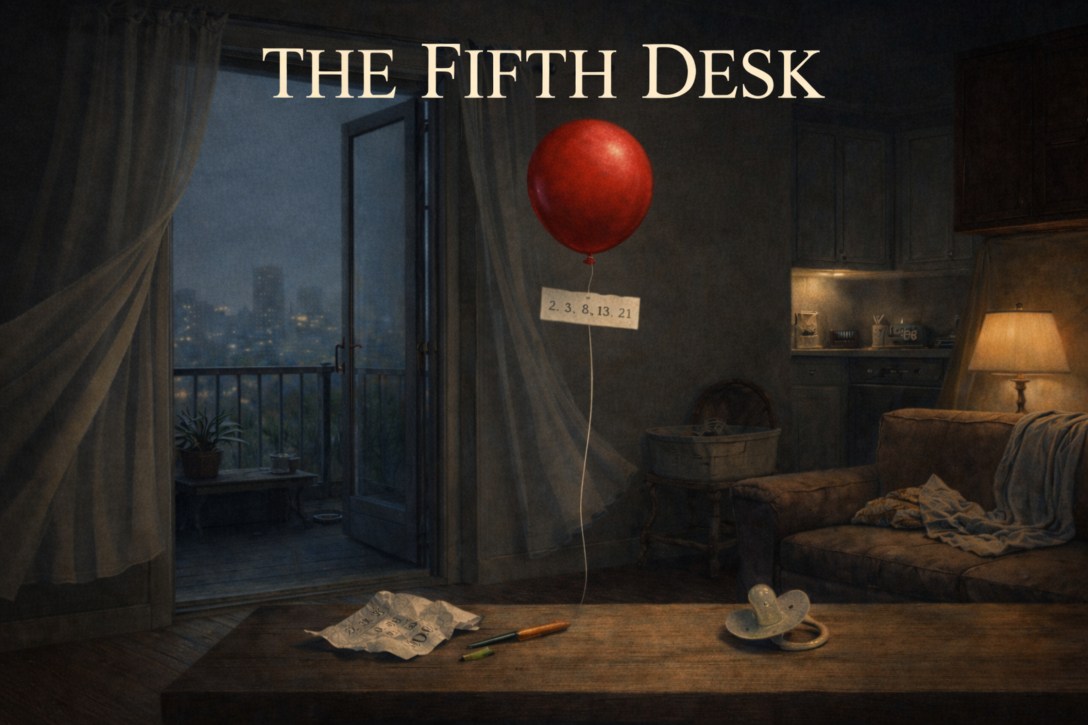
The Gospel of the Lottery

Modern capitalism did not eliminate the need for miracles. It replaced divine intervention with statistical probability. For most of human history hope was organized by religion. Salvation arrived through providence, moral endurance, or divine grace. Life’s hardships were understood as part of a larger order whose meaning might not always be visible but whose structure… Continue reading The Gospel of the Lottery

The Biological State

Political identity once appeared to reside in the realm of ideas. Citizens were distinguished by beliefs, allegiances, and affiliations expressed through speech, association, and ritual participation in civic life. Voting was understood primarily as a symbolic act: the moment when the individual stepped forward to declare a preference within the public sphere. The mechanism of… Continue reading The Biological State

The Unfinished Artifact

For much of the twentieth century the unfinished work carried a clear meaning. It indicated interruption. A novel left incomplete suggested the death of its author or the abandonment of an ambition that could not be disciplined into final form. An unfinished film implied financial collapse, exhaustion, or indecision. In every case the artifact appeared… Continue reading The Unfinished Artifact

The Demon with an Office

For a long time we believed evil was primitive. That was the language people used when explaining acts that seemed to exceed ordinary cruelty. Violence was called animalistic. Greed was described as base instinct. Even when crimes appeared elaborate, the explanation usually moved backward in time: the offender had reverted to something older than civilization,… Continue reading The Demon with an Office

The Administrative Universe

Administrative systems existed to organize work. The assumption seemed obvious. Offices required procedures. Institutions required documentation. Large organizations needed mechanisms capable of coordinating thousands of individuals who would never meet each other directly. Identification numbers, time clocks, compliance reports, and disciplinary notices appeared as practical tools designed to maintain order. They belonged to the technical… Continue reading The Administrative Universe

The Stitched World

For most of his life the world had possessed a reassuring quality of continuity. Buildings remained where they had been the day before. Streets followed the same lines across the map. Weather arrived in recognizable forms: rain, wind, snow. Even disruption appeared within familiar limits. A storm passed. Traffic resumed. Offices reopened the following morning… Continue reading The Stitched World

Calibration Day

Office life was merely unpleasant. Not terrible. Inconvenient but manageable. That was the word people mostly used in those years. The fluorescent lighting was unpleasant. The supervisors were unpleasant. The punch clock was unpleasant. Even the rituals of the morning commute were described this way, as minor irritations that accompanied adult life. The language was… Continue reading Calibration Day

The Building and the Burden

There are moments in literature when a building stops functioning as scenery and reveals itself as the governing structure of the narrative. Corridors become sequences. Floors become stages. Architecture begins to behave like a system through which the characters must move whether they understand its rules or not. Chapter IV of The Pale Criminal belongs… Continue reading The Building and the Burden