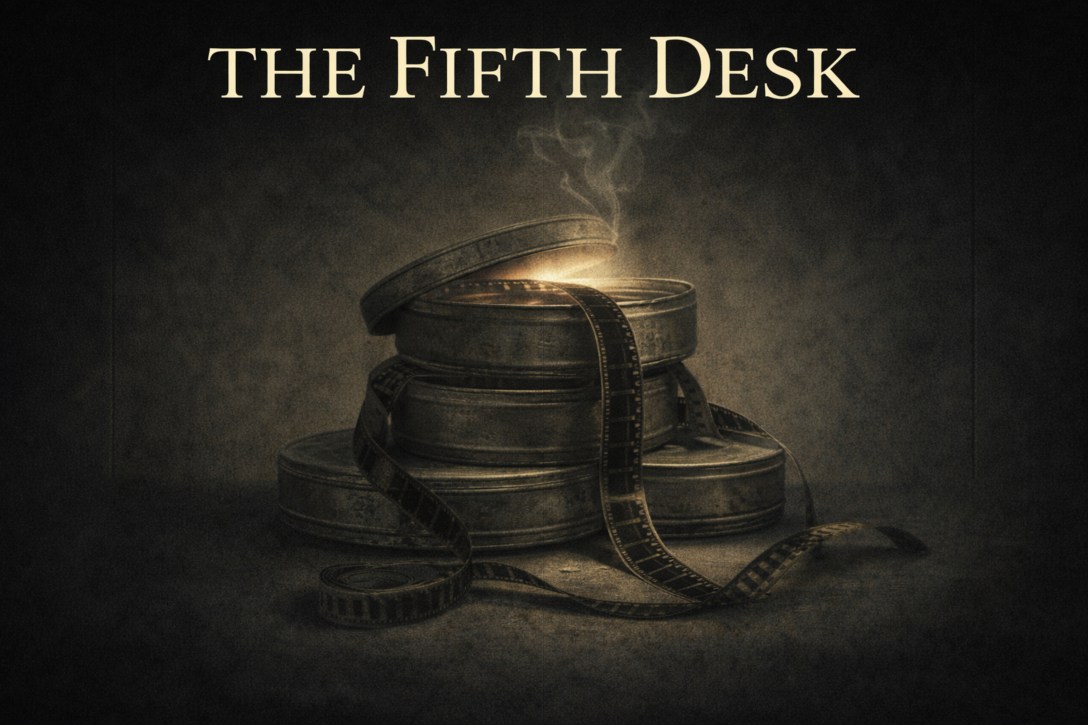
For much of the twentieth century the unfinished work carried a clear meaning. It indicated interruption. A novel left incomplete suggested the death of its author or the abandonment of an ambition that could not be disciplined into final form. An unfinished film implied financial collapse, exhaustion, or indecision. In every case the artifact appeared as residue—the visible remainder of a process that had failed to reach its natural conclusion.
Completion functioned as the cultural seal of legitimacy. A finished work resolved the tensions it introduced. Narrative pressure accumulated across the structure and then released at the end, restoring equilibrium between the artifact and the audience encountering it. Closure confirmed mastery. The artist had controlled the materials long enough to produce a stable form.
This assumption began to erode quietly during the late twentieth century as the environments in which artifacts circulated underwent structural transformation. Recording technologies multiplied. Images, sounds, and events could now persist indefinitely as reproducible signals. Distribution systems expanded the number of contexts through which a work might move. The archive grew beyond the scale of any individual memory. Under these conditions the completed artifact entered a field of constant reinterpretation the moment it appeared.
Artists gradually began responding to this environment in an unexpected way. Instead of strengthening closure, some began constructing works that deliberately refused it. The narrative would advance toward its point of maximum tension and then stop. Consequences remained unspoken. Resolution disappeared.
What had once been considered artistic failure became a structural choice.
At first such gestures appeared experimental. Yet over time the pattern spread across multiple forms of cultural production. Films ended with unresolved images. Novels terminated at moments that demanded continuation. Installations looped endlessly without narrative progression. The unfinished artifact emerged not as an accident but as a recognizable formal strategy.
The behavior of these artifacts reveals their function. A completed work converts tension into resolution. An unfinished work preserves tension as a permanent condition. Instead of dissolving the forces that produced the artifact, the structure holds those forces in suspension.
The artifact becomes less like a story and more like a container.
The logic becomes visible in a small film project produced by a group of students during the early years of the digital archive. The narrative concerned a character who crossed an invisible boundary into a territory governed by obscure administrative rules. In the final scene the protagonist is bound to a pole while an executioner wearing a pig mask prepares to whip him. The punishment begins. The consequences do not follow. The film ends immediately afterward. A black screen replaces the image.
On first viewing the decision resembles an avant-garde provocation. Yet the internal structure reveals something more precise. The film halts at the moment where narrative resolution would normally begin. By withholding the aftermath it preserves the event in a state of maximum pressure.
During the production of that scene an unusual disturbance occurred. The actor wearing the pig mask appeared to lose control of his performance. Movements rehearsed as theatrical gestures became strangely precise. The atmosphere around the set shifted in subtle ways the participants struggled to explain afterward. When the footage was later reviewed, faint distortions appeared in the recording—irregular halos around motion, slight duplications of form, geometric traces embedded in the grain of the image.
Whether these anomalies resulted from technical malfunction or heightened emotion mattered less than the structural consequence. The recording preserved the moment of disturbance. The unfinished film became a coordinate where the event continued to exist in suspended form.
The artifact had become an apparatus.
Once such an artifact existed, documentation became unavoidable. The story alone could no longer contain the event that had occurred within it. A second voice became necessary — not the voice of a character, and not the voice of the author, but the voice of an office responsible for examining the evidence.
That office first appeared elsewhere, within the pages of The Pale Criminal, where marginal notes began to accompany the narrative body. At first these annotations seemed merely explanatory. Yet they gradually took on a different function. The notes corrected the narrative, reframed its claims, and exposed structures the story itself could not acknowledge.
Over time the commentary developed authority. Annotation became analysis. Analysis became procedure. Procedure became institution.
The institution came to be known as The Fifth Desk.
What began as marginal commentary inside a fictional narrative expanded into a procedural apparatus capable of examining cultural artifacts with greater distance and clarity. The transformation did not result from a deliberate theoretical program. It occurred because the original structure had never closed. The novel remained unfinished in the most productive sense of the term. Its tensions continued generating interpretation long after the narrative itself had ended.
The Fifth Desk is therefore not separate from that unfinished structure. It is the continuation of the apparatus the novel produced.
This development would have been difficult to imagine in earlier artistic environments where works circulated primarily as physical objects. A painting hanging in a gallery or a novel printed on paper could be revisited repeatedly, but the event of its creation remained fixed in the past. Modern recording technologies altered that relationship. Magnetic tape and digital storage allowed events themselves to persist as repeatable structures. Images became signals that could be replayed indefinitely.
Within this environment the unfinished artifact acquires unusual stability. Because its internal tension remains unresolved, the artifact continues interacting with the system that surrounds it. The work does not conclude its operation when the audience leaves the theater or closes the book. The tension remains active within the structure.
Seen from this perspective the unfinished artifact reveals something fundamental about the cultural conditions that produced it. Modern societies increasingly operate through complex systems whose mechanisms remain largely invisible to the individuals living inside them. Administrative institutions, algorithmic infrastructures, and technological networks shape behavior without presenting themselves as coherent narratives. The forces governing daily life rarely resolve themselves in ways traditional storytelling can comfortably represent.
Faced with this condition, artists have begun constructing artifacts that mirror the structure of the systems surrounding them. Instead of resolving tensions, the work preserves them. Instead of closing the narrative, it holds the moment of disturbance in place.
The unfinished artifact therefore performs a diagnostic function. It reveals that the cultural environment itself has become unresolved.
When a society begins producing works that refuse to end, it is often because the historical forces shaping that society have not yet reached their own conclusion. The artifact preserves the pressure of those forces until the culture learns how to interpret them.
In this sense the unfinished work resembles a meteorological instrument. It records tension accumulating in the atmosphere without claiming to disperse the storm.
For a time the participants in the student film believed the unfinished structure had successfully contained the disturbance that appeared during its production. One of them even experienced several months of unusual calm afterward, as though the pressure governing his behavior had been redirected elsewhere. Eventually the disturbance returned. The artifact had not eliminated the force it encountered. It had only delayed its operation.
Yet delay itself carries significance. A temporary suspension of pressure can create space for recognition. During that interval the observer may glimpse the structure producing the disturbance in the first place.
This is the true function of the unfinished artifact. It does not resolve the forces shaping the cultural moment. It holds them long enough for someone to understand the sky under which the storm formed.
The work remains unfinished not because the artist failed to complete it but because the system it describes continues to operate.
The unfinished artifact is therefore not an experimental aesthetic gesture. It is the narrative form that appears when a culture loses confidence in the possibility of resolution.
Stories stop ending when the systems producing them no longer do.
The artifact remains open because the weather has not yet cleared.
 The New Poetics