Perimeter Is Theology Now

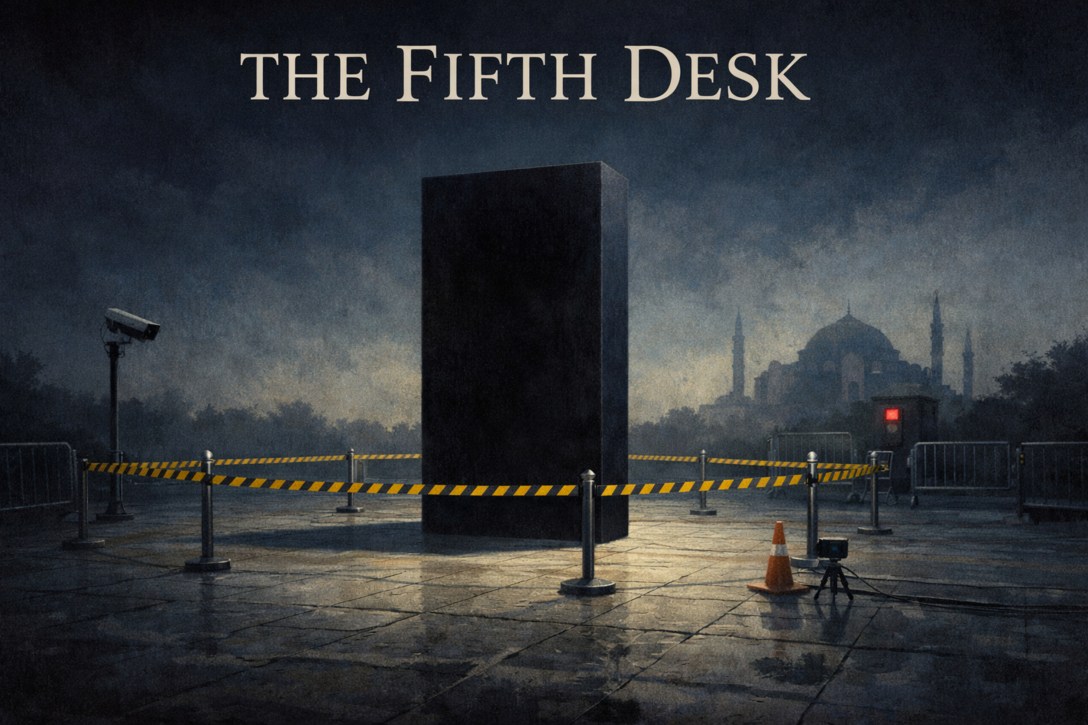
The black slab in the courtyard of Ayasofya was not treated as miracle. It was treated as paperwork. Within hours the object had been measured, categorized, perimetered, insured, and circulated through the informational bloodstream of the modern world with the quiet inevitability of payroll. Engineers discussed density. Analysts proposed alloys. Insurance underwriters drafted liability riders.… Continue reading Perimeter Is Theology Now

When the Ground Stops Being Neutral

For much of the nineteenth and twentieth centuries, the modern individual believed himself to be the center of the story. He might have been mistaken, but the belief itself shaped the cultural imagination of the era. The artist, the hero, the rebel, the visionary, the tragic soul—each assumed that history unfolded around the drama of… Continue reading When the Ground Stops Being Neutral

The Architect of the Labyrinth

There are unfinished works that remain unfinished because circumstances intervened. Time ran out. Health failed. Attention moved elsewhere. The work simply stopped. And then there are works that remain unfinished for a different reason. They attempted something structurally larger than the form that was meant to contain them. These works do not fail at the… Continue reading The Architect of the Labyrinth

Flesh After the Nude

For centuries the nude stood at the center of Western art. From Greek sculpture through Renaissance painting and into the academic studios of the nineteenth century, the human body functioned as the primary site where beauty, philosophy, and metaphysics converged. Artists returned to it again and again because it appeared to contain everything: desire, mortality,… Continue reading Flesh After the Nude

Children of the Broadcast Era

In the late twentieth century, before the internet fractured the visual field into millions of private channels, the television signal still ruled the cultural sky. It was the dominant weather system of perception. News, entertainment, politics, myth, advertising, scandal, aspiration, and fantasy all traveled through the same glowing rectangle in the corner of the room.… Continue reading Children of the Broadcast Era

The First Machine

In the history of artistic movements there are often works that first appear as jokes. They look like satire, grotesque exaggeration, or minor experiments produced by a young writer still searching for a voice. Their tone seems too absurd to be taken literally. Their structure appears intentionally ridiculous. Readers treat them as curiosities rather than… Continue reading The First Machine

A Portrait of the Artist as a Young Man

Movements in art rarely begin where history later places their origins. Critics prefer visible beginnings: manifestos, declarations, movements announcing themselves with titles and theoretical clarity. These moments are convenient. They provide historians with starting points and give readers the comforting impression that ideas arrive fully formed. But movements almost never begin there. They begin earlier,… Continue reading A Portrait of the Artist as a Young Man