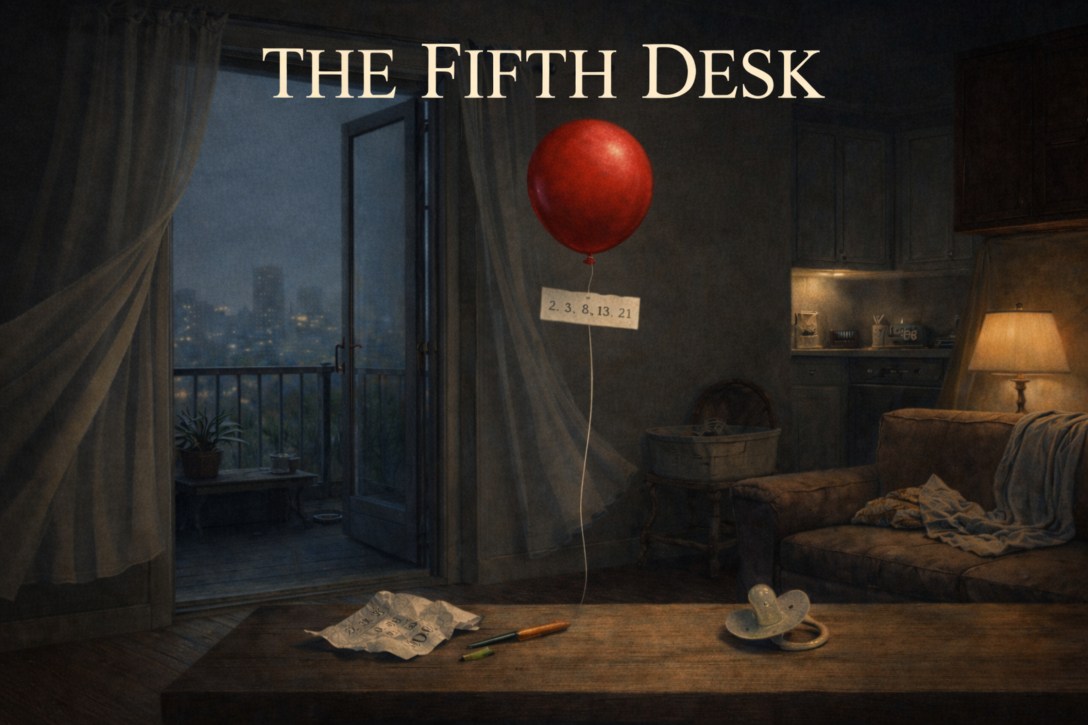
Modern capitalism did not eliminate the need for miracles. It replaced divine intervention with statistical probability. For most of human history hope was organized by religion. Salvation arrived through providence, moral endurance, or divine grace. Life’s hardships were understood as part of a larger order whose meaning might not always be visible but whose structure ultimately transcended human calculation.
Contemporary economic life has quietly replaced that framework with another system of belief. It appears rational, mathematical, and secular, yet it performs many of the same psychological functions that religion once fulfilled. This belief is the lottery.
The lottery promises an event that suspends ordinary causality. Through the random alignment of numbers, a life constrained by structural limitations can suddenly be transformed. Participation is not driven by reasonable expectations of success—lottery systems are famously engineered to produce overwhelming odds against winning—but by the necessity of imagining that deliverance remains possible.
Where traditional religion promised salvation through divine intervention, the lottery promises deliverance through probability.
The Red Balloon captures this transformation of hope with remarkable precision. What initially appears to be a piece of magical realism gradually reveals itself as a parable about the replacement of providence with statistical salvation.
The protagonist, Randolph Ornette Coleman, lives inside the economic conditions that generate this new theology. His life is governed by numbers. As a cargo driver navigating an urban grid of deliveries and deadlines, Randolph survives through continuous optimization. Routes must be calculated. Deliveries timed. Household expenses managed with obsessive precision. Even hunger becomes part of the ledger. Skipping meals helps balance the weekly budget.
Randolph believes the system is solvable.
If the correct routes could be discovered, if the correct expenses could be managed, if the correct numbers could be selected, the structure of life might finally yield a way out.
Within this environment the red balloon appears.
The balloon behaves less like a supernatural object than like a strange oracle disguised as coincidence. It first reveals more efficient driving routes through the city grid. Randolph suddenly begins completing his deliveries far earlier than expected. Traffic patterns that once appeared chaotic begin to align with an invisible logic. The world begins to feel structured.
Soon the balloon offers something more consequential: a sequence of numbers.
Two, three, five, eight, thirteen, twenty-one.
These numbers form part of the Fibonacci sequence, a mathematical pattern in which each term is generated by adding the two preceding numbers.
F_{n}=F_{n-1}+F_{n-2}
The Fibonacci sequence appears repeatedly in natural structures—spiral shells, plant growth patterns, the geometry of certain galaxies—and has long been interpreted as evidence of a hidden numerical architecture underlying the physical world.
To Randolph, the sequence suggests something extraordinary: the universe may possess a pattern after all.
The balloon appears to unlock the logic behind both traffic and fortune. What once looked random now appears governed by a deeper structure. Randolph follows the numbers and wins the lottery.
For a moment the fantasy appears justified. His workday shortens. His family grows happier. The winning ticket produces a sudden windfall that allows him to purchase a new truck, a saxophone, and a diamond ring for his wife. The dream of escaping economic constraint seems to have materialized.
But the story’s deeper architecture complicates this apparent triumph.
Beneath the surface narrative lies the structure of a parable.
First comes oppression. Randolph’s life is defined by scarcity, exhaustion, and constant calculation. Every decision is constrained by the arithmetic of survival.
Then comes revelation. The balloon introduces the possibility that hidden knowledge exists.
Elevation follows. Randolph’s life improves. The lottery win appears to confirm that the world possesses a solvable structure.
But parables rarely end with miracles. They end with tests.
When Randolph’s pregnant wife collapses, he faces a choice between responding to the immediate demands of reality or protecting the ritual of the lottery draw that he believes will secure his family’s future.
He chooses the draw.
The promise of statistical salvation overrides the obligations of ordinary life.
The final stage arrives quietly. Randolph asks the balloon for his ultimate wish—to play the saxophone like the jazz master whose name he carries. The balloon instructs him to ask properly. Then it suddenly pops.
In the silence that follows, his wife announces that the bed is wet. Her water has broken.
The miracle disappears precisely when biological reality asserts itself.
The structure reveals the story’s central insight. The lottery does not merely offer money. It offers a narrative powerful enough to reorganize hope. It invites believers to imagine that the universe contains a hidden pattern waiting to be discovered.
The Fibonacci numbers intensify that illusion because they carry the aura of cosmic inevitability. If the universe itself grows according to hidden numerical laws, perhaps the correct sequence can unlock fortune as well. Mathematics begins to resemble destiny.
Yet the story ultimately dismantles that belief.
Randolph does win the lottery, but the victory proves smaller and more fragile than expected. Taxes reduce the prize dramatically. Impulsive purchases quickly diminish the remainder. The financial windfall does not dissolve the structural realities of family life or economic uncertainty.
More importantly, the miracle cannot survive contact with ordinary human events.
Birth interrupts mathematics.
Biology interrupts probability.
The balloon bursts at the precise moment Randolph must confront the real conditions of his life: a wife entering labor, a child sleeping in the next room, and a future that cannot be solved through numbers alone.
The modern world increasingly presents itself as governed by algorithms, statistics, and systems waiting to be optimized. The dream of the perfect pattern—whether in predictive technology, financial markets, or games of chance—exerts a powerful attraction. It suggests that mastery might be achieved not through endurance but through the discovery of the correct formula.
The balloon embodies that dream. It functions less like magic than like a primitive algorithm, offering Randolph the seductive belief that the correct pattern can solve the problems of life.
But human life does not unfold according to patterns.
The lottery promises transcendence through chance.
The birth restores something older and more stubborn.
Life does not follow patterns.
It interrupts them.
 The New Poetics