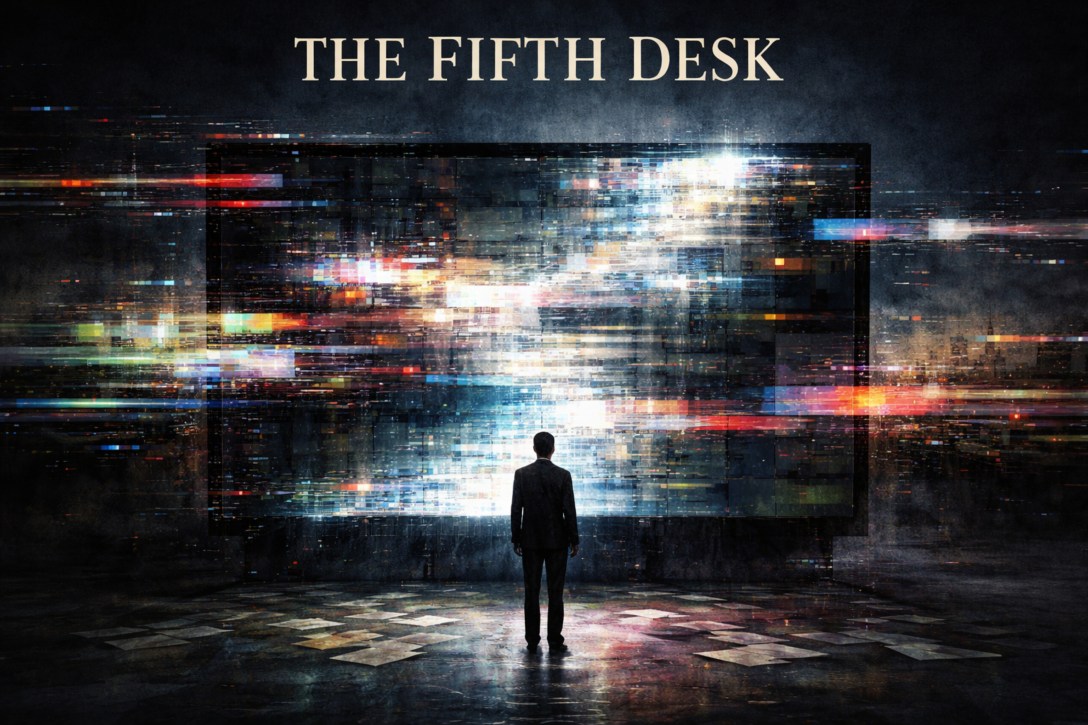
For most of the twentieth century moving images were understood as recordings.
A camera captured light reflected from objects in the world. The result was stored on film or magnetic tape, preserving a sequence of frames that could later be projected or broadcast. The technology allowed events to travel across distance and time, but the basic assumption remained intact.
Something had happened in front of the lens.
Cinema built an entire cultural mythology around this premise. Even when filmmakers manipulated lighting, editing, or staging, the image still carried the aura of captured reality. The frame appeared stable, the sequence continuous. A film might tell a fictional story, but the images themselves were understood as visual records assembled into narrative form.
The authority of moving images rested on this stability.
Digital media quietly altered the conditions that made that stability possible.
The transformation did not occur all at once. Early digital video attempted to imitate the behavior of film, preserving the illusion that the camera captured a continuous stream of visual information. But beneath the surface the technology already operated according to a different logic.
Digital images are not continuous recordings.
They are packets of data.
A frame of video is broken into segments that can be compressed, reordered, transmitted, and reconstructed by machines. Instead of preserving a stable visual surface, the system constantly calculates which pieces of information are necessary to maintain the illusion of motion.
The image becomes a negotiation between data and bandwidth.
Under these conditions the moving image behaves less like a photographic record and more like a signal traveling through a network.
Most of the time this transformation remains invisible. Compression algorithms work efficiently enough that the viewer rarely notices their activity. The image appears smooth, the motion fluid, the illusion of stability preserved.
But occasionally the machinery reveals itself.
A video pauses as the network struggles to deliver the next packet of data. Blocks of color freeze in place while the image attempts to reconstruct itself. Motion tears across the screen as the compression algorithm miscalculates the relationship between frames. The picture dissolves into fragments before suddenly stabilizing again.
For a brief moment the viewer sees what the image actually is.
Not a window onto reality, but a signal under pressure.
These moments were once treated as technical failures. Engineers designed systems to hide them as effectively as possible. Glitches, compression artifacts, and signal distortions were considered imperfections that interrupted the smooth delivery of visual information.
Yet the digital environment has made such imperfections increasingly visible.
Online video circulates through countless technical environments: different devices, different screen sizes, different bandwidth conditions, different compression standards. Each stage of transmission alters the image slightly. Color values shift. Edges blur. Patterns of digital noise accumulate across the surface of the frame.
The moving image becomes unstable.
This instability produces an unfamiliar visual atmosphere. Instead of presenting a perfectly controlled cinematic surface, contemporary video often carries traces of the technological systems through which it travels. Artifacts of compression shimmer along the edges of objects. Blocks of color emerge within areas of rapid motion. The frame occasionally fractures into abstract geometries before reassembling itself.
The signal becomes visible inside the image.
For artists working within the conditions of the New Poetics, this instability is not a defect to be corrected.
It is material.
The moving image no longer needs to pretend that it exists outside the technological environment that produces it. The distortions generated by digital transmission can become part of the work itself. Instead of concealing the machinery of the medium, the artist can allow that machinery to surface within the visual field.
Video becomes an exploration of signal behavior.
A sequence of images may be intentionally compressed and recompressed until the underlying data structure begins to distort the original footage. Frames may be manipulated so that fragments of earlier images persist inside later ones. Motion may produce unexpected visual textures as the algorithm struggles to reconcile differences between successive frames.
The result is not simply a glitch.
It is a new way of thinking about the moving image.
When the signal becomes visible, the viewer begins to understand the image differently. Instead of asking what the video represents, one begins to notice how it behaves. Patterns of distortion reveal the presence of hidden systems. Colors smear across the frame according to rules embedded within compression algorithms. Fragments of previous images linger like ghosts within the data stream.
The viewer encounters the image as a process rather than a picture.
This approach defines a practice known as Channel Interference.
The name refers to a familiar experience from the earlier era of broadcast television. When signals overlapped or transmission weakened, the image on the screen would fracture into static, noise, and flickering patterns. The viewer understood that multiple signals were competing for the same channel.
In the digital environment interference takes a different form.
Signals do not collide in the airwaves but within streams of data moving through networks. The distortions that appear on the screen reveal the invisible infrastructure of compression algorithms, streaming protocols, and machine calculations attempting to maintain the flow of images across the network.
Channel Interference treats these disturbances as the true material of video.
The work explores what happens when moving images are allowed to behave according to the logic of the systems that produce them. Footage becomes raw input for processes that fragment, distort, and recombine the signal. The resulting sequences retain traces of the original imagery, but those traces appear transformed by the pressures of digital transmission.
The frame dissolves into data.
Within this environment the viewer no longer encounters a stable cinematic window. Instead they experience a field of shifting visual signals whose behavior reflects the technological conditions of contemporary media.
The image flickers, fractures, and reassembles itself.
And in those moments of instability the viewer sees something that earlier forms of cinema attempted to hide: the moving image is not simply a representation of the world.
It is a signal moving through machines.
Channel Interference begins at the moment that signal becomes visible.
 The New Poetics